



APM’s Projecting the Future series is a big conversation with project professionals, decision-makers, business leaders and others with a stake in successful projects. Our discussion papers share insights on the challenges and opportunities affecting our world, including the future of work and skills. Visit www.apm.org.uk/projecting-the-future/to read the papers and join the discussion
The Future of Work
October
2020
On-shored, near-shored and outsourced…
Employing teleworkers is sometimes a workaround rather than a labour cost-saving exercise for business. Take Estonia, for example – the European posterchild of digitalisation, with a population of slightly below two million. Digital talent is in short supply in the biggest of countries, let alone in a tiny pool like this. So for Estonians with an entrepreneurial spirit it makes sense to improve their chances and recruit from a global pool of hundreds of millions. They can pick and choose among digital collaborative tools, messaging apps and time-tracking systems to eliminate physical distance. Meanwhile, team-building retreats organised on an annual basis can give face-to-face boosts to the digital team spirit.
A more localised version of teleworking as a necessity comes from the US. As a result of President Trump’s ban on immigration from several Muslim-majority countries in 2017, and his hostility to and eventual suspension of temporary work visas this June, Silicon Valley has set its eyes on Toronto as a near-shoring destination.
What makes Toronto an ideal choice is how the city has reinvented itself as a tech hub that currently has a local tech workforce of 400,000. Figures show that one million Torontonians have a STEM degree, with 40,000 new stem graduates joining their ranks every year. The city’s appeal for big tech is further enhanced by its ethnic diversity and Canada’s Express Entry Visa programme.
But this September, as remote working is becoming a permanent arrangement for more and more tech companies, news of aligning salaries with lower cost-of-living expenses outside Silicon Valley hit the headlines. Although it may sound somewhat tongue-in-cheek when big tech pitches these pay cuts as necessary steps to ensure equal pay for different work locations, we’ve heard a lot about stellar rental costs and food prices in the San Francisco Bay area. And indeed, figures show that those who, for example, make a 60-mile commute twice a day from Salida, Colorado to Fremont on the San Francisco Bay may reduce their cost of living by as much as 80 per cent (the same figure for Toronto is only a modest 14 per cent).
Is remote office technology a friend or a foe of white collar workers in the long run?
The same digital tools that make remote team-work viable have also led to the rise of platforms which connect businesses with distant freelancing professionals. On these platforms, as Richard Baldwin, author of The Globotics Upheaval explains, copy-editors from Bangkok, web designers from Belarus and their like sell their reliable services at a fraction of the usual cost. Recruitment and delivery of the job by the contractor, as well as payment for it, take place on the platform. Screenshots taken from the contractor’s computer while they carry out the task will serve as proof that the hours they bill for are genuine, and ending the contract is as simple as pushing a cancel button.
Baldwin argues that the “telemigrants” of these platforms will create unprecedented international competition for stable middle-class jobs in the US and Europe – especially when natural language processing (NLP) will have removed language barriers. He envisages an on-demand economy, where a small number of top-skill core employees are complemented by an entourage of global freelancers at discounted rates.
But it’s hard to tell whether the use of freelancers from countries with lower labour costs will eventually reach critical mass. Everyone who has ever tried to sort out a bad internet connection with customer service on the other side of the globe can testify to how the customer experience can be compromised by outsourcing practices. And even if the discounted freelancer has The Hitchiker’s Guide To The Galaxy’s Babel Fish in their ear, translating between any two languages in real time, cultural contexts and the gaps between them will remain.
And there are also some important social and economic implications to reckon with. There seems to be a consensus now that today’s political turmoil in the UK and the US can be traced back to blue-collar workers feeling left behind and disenfranchised by globalisation, and the same could happen to white-collar professionals if telemigration becomes mainstream.
The macroeconomic consequences of outsourcing can also be seen now more clearly. The Made Smarter group of British industrial experts, for example, believe that the UK’s efficiency puzzle can be partly explained by the outsourcing bonanza of the preceding decades. On a flexible British labour market there was less need for long-term thinking and much less was invested in training and upskilling, which are key to having a modern, digitally apt workforce.
Desperate times call for desperate measures, and we’ve been learning that the hard way during the pandemic. For many businesses in this crisis, cutting costs is synonymous with trying to scrape through the lean times. But in the long run, easing the current workforce into a full-on digital age and aligning university and vocational training with the shifting demand of the labour market needs to have priority. Frugal short-termism and the former paradigm of racing to the bottom only tears the social fabric further apart rather than repairing it.
by Zita Goldman

Beyond agility: why organisations need a gymnastic mindset
“In a time of crisis, with the future of an organisation at stake, a ‘fail fast’ approach may not be optimal”
Change in the workplace is nothing new. The recent pandemic, however, has accelerated change and reshaped the way we work. For some time, we have used the acronym VUCA – volatility, uncertainty, complexity, and ambiguity – to describe a world of rapidly changing business. But as a result of recent events, the term is no longer sufficient.
Our new landscape is one defined by shock (major and dislocating change), speed (rapidly accelerating change) and surprise (change that is unexpected both in its nature and its impact).
Organisations already had a need to be agile, but the Covid-19 pandemic has added complexity by way of major disruptions to our society virtually overnight. To thrive in a post-Covid landscape – one characterised by shock, speed, and surprise – organisations need more than agility alone; they need a “gymnastic” mindset to cope with change.
What are some characteristics of a gymnastic organisation?
- Nimble: they pivot their activities rapidly in one direction and then, if necessary, in another
- Elegant: as they pivot, these organisations are controlled in the way they implement change
- Confident: they believe in achieving success and are resolute in finding it
Becoming gymnastic is not easy. It requires a multi-pronged approach that draws upon both the traditional and the new – balancing structured project management approaches that have stood the test of time, a mindset that embraces change, and the capability to manage complex situations that involve multiple stakeholders.
Manage shocks of change
Major change can tear down old certainties and foster anxiety. It can destroy the way value was once created and its consequences can be hard to understand.
Organisations that are adversely affected by major shocks must focus on how they adapt to new situations.
As one example, many restaurants upweighted their home delivery services during the pandemic to offset the loss of in-house customers. But adaptation is frequently not enough. In a crisis when customer needs are constantly evolving, organisations must pivot to change their mission and reinvent what they do to continue to deliver value.
Overcome the paradox
The ability to pivot requires nimbleness and agility. In a time of crisis, with the future of an organisation at stake, a “fail fast” approach may not be optimal. There needs to be some certainty around outcomes when there is pressure on profitability. Therein lies the paradox: ignore change and fail, or change in the wrong direction – and fail.
With a gymnastic mindset, an organisation can solve this paradox.
Organisations must be willing to try different approaches, remain focused on results and maintain the ability to move in a different direction when new ways of working appear to fail. To succeed, this requires a disciplined and structured project management approach, layered on top of innovation and flexibility.
Apply Disciplined Agile
One well-established response to change has been to apply an Agile approach to projects. In fact, Project Management Institute’s (PMI) Tomorrow’s Teams Today report found that, over the past year, one in four projects were completed using Agile, and that over the next five years half of all project management offices expect that number to increase.
PMI’s suite of Disciplined Agile (DA) offerings can help organisations tailor Agile processes to meet their unique challenges. DA provides guidance for understanding different ways of working, the freedom to choose the approaches that best suit team objectives, and the opportunity to continuously improve ways of working so that productivity can increase. For example, with PMI’s Basics of Disciplined Agile online course, users can learn how to navigate hundreds of Agile frameworks and techniques so that they can pick the best approach for the situation at hand.
The new world we live in requires constant adaptation in the ways we work – new openness, structures, and skills are required. Disciplined Agile recognises that every organisation is different, and within each organisation there are different ways of working. This is the centre of the gymnastic mindset.
Address technology – and people
Technology plays an important role in helping organisations deliver against their objectives. As people increasingly work alongside machines to perform their jobs, the need for technology will also increase. However, technology is not a solution on its own. Organisations must recruit, develop and retain people with the right skills and knowledge, the right approach to technology governance, and the belief that technology can be an avenue for success.
Beyond technical skills, organisations must also identify individuals who possess what PMI calls “power skills” and encourage their growth. In a time of increased automation, these power skills emphasise enduring human capabilities, including:
- Collaborative leadership
- Empathy for colleagues and customers
- Creativity and innovative problem solving
- Excellence in communication and persuasion
- Passion and determination to deliver on outcomes
Power skills are increasingly important in today’s new work ecosystem. In fact, PMI’s Pulse of the Profession research found that project professionals ranked collaborative leadership as the single most essential team skill to possess. With teams equipped with both technical and power skills, organisations will be able to deliver a competitive advantage in an evolving work environment.
Enable the change maker
In The Project Economy, change is carried out through a transformative series of projects. Outcomes are what matter in The Project Economy – delivering substantive value at the conclusion of each initiative – and project managers, or change makers, will be at the forefront helping the world reboot and recover following the pandemic.
Armed with the right skillsets, change makers will help ensure organisations continue to respond positively as the world increasingly changes. By providing training, best practices, effective tools and networking opportunities, PMI is committed to helping organisations and change makers master the skills and capabilities necessary to operate and thrive in this new work ecosystem.
Extending your brand’s reach with a digital branch
With the continuing disruption and uncertainty caused by the coronavirus pandemic, many brands face significant challenges retaining their customers, let alone growing their businesses. The past few months have highlighted a pre-existing need for brands to maintain a strong online presence with digital branches to support constantly changing consumer preferences.
What is a digital branch?
A digital branch of business, available to customers from anywhere, is an increasingly important service channel fuelled by the fact that consumers are spending more time online than ever before. It’s a one-stop portal where customers can engage directly with the business by making transactions and interacting with business representatives. Effective digital branches prioritise community and customer engagement via online portals, which are designed to be readily available using any private digital channels.
The importance of adaptability in an age of constant change
While there’s no denying the disruption caused by Covid-19 and the looming global recession, these factors have largely highlighted pre-existing challenges. When it comes to technology and modern consumer behaviors, the only constant is change. The need for innovation has never been clearer, and brands which fail to keep up with the times risk becoming irrelevant very quickly.
Digital branches enable brands and customers to interact on a personal level, rather than solely through chatbots and email. This is more important than ever in a time when in-person contact is either restricted or undesirable. But current challenges aside, growing a digital branch gives brands the opportunity to adapt and scale with demand. Employees can manage customer engagements from anywhere, and customers have instant access right from their pockets.
Establishing virtual workspaces in the digital era
Working from home is already well established in many businesses, but as recent events have demonstrated, many others still have some catching up to do. Yet despite continuing pressure to let employees work from home, there are some important business benefits of enabling a freer working environment, which businesses can continue to enjoy in the long term too. Many people tend to work better from home, while businesses get to enjoy reduced costs associated with office space and equipment.
A digital branch isn’t just about convenience. It’s also a one-stop venue where you can run the business from anywhere. Add bank-grade security and a fully managed, branded environment into the mix and your team has everything they need to engage customers remotely without adding unnecessary operational risk. Moreover, since all interactions are recorded, you can maintain full auditability and visibility into your communications.
Empowering persistent relationships and customer engagement
A digital branch should provide a fully branded and personalised experience that people come to instantly associate with your business. Today’s websites and online portals are much more than just digital flyers – they offer community-driven experiences and a range of transactional services. Consumers should be able to do anything via your virtual branch that they would be able to in person.
One of the most important benefits of establishing a digital branch is that it lets you be there for your customers during their time of need. Features such as secure messaging and video meetings mean you can focus on persistent relationships and engage customers on a similar level as you would in-person. At the same time, the digital nature of activities which take place through virtual branches means you’ll always have a wealth of data-driven insights available.
Enabling seamless growth with a private digital portal in every customer’s pocket
Every company needs a roadmap for digital change. Those who have adopted temporary fixes in light of current challenges should now look towards long-term innovation. Strong customer relationships will always represent the foundations for success in any business, and growth depends on the ability to engage with customers no matter where they are. Adding a digital branch to your brand is the one thing that can make that happen.
Moxtra empowers persistent relationships and stronger customer engagement in an era of constant disruption. Tell us about your business today to start your digital transformation.

The future will be project managed
“It is increasingly apparent that many organisations can only survive and thrive by ensuring their projects can adapt quickly to new circumstances”
In turbulent times, the success of organisations will depend on putting adaptability at the heart of project planning and delivery.
Project management has long been an overlooked profession, associated mainly with construction and engineering. But this is changing as the economic contribution of the profession becomes clear.
Research by Association for Project Management (APM) and PwC, published in the 2019 report The Golden Thread, found that project-related work generates £156.5 billion of Gross Value Added (GVA) to the UK economy annually, and employs 2.13 million full-time equivalent workers. A further report published in 2020 found that project-related work among SMEs, which represent 99 per cent of all UK businesses, contributes between £79-£94 billion of GVA each year. This is to say nothing of the benefits successful projects create for businesses and communities.
Project managers must embrace new skills and mindsets to ensure adaptability is at the heart of any project’s culture. APM’s latest Salary and Market Trends Survey found that developing the skills needed for the future workplace was the most significant challenge project professionals anticipated in the next five years. A subsequent survey asked project professionals what skills will be most important for them to develop in the post-Covid world.

Since project professionals are at the forefront of planning and delivering change to achieve social and economic benefits, businesses that prioritise the development of these skills within their project teams will have a distinct advantage.
The sheer economic power of this profession means skills development is a matter of significance, not only for project practitioners but for everyone with a stake in the performance of a business, a public service, or local or national government.
It is also increasingly apparent that many organisations can only survive and thrive by ensuring their projects can adapt quickly to new circumstances – for example, using digital communication delivery for remote work to bind teams together. One clear lesson from the Covid-19 crisis is that communication has become increasingly intertwined with technology and digital skills, elevating the importance of digital know-how in this new world.
Change on a cultural level
The disruption of a global pandemic is a significant impediment to business. This is not the only challenge organisations face, however. Ongoing issues such as digital transformation and the climate crisis mean workplaces are likely to continue changing at an accelerated pace.
New skills alone will not be enough to tackle these challenges. A shift in attitudes and behaviours is also required. Organisations in the public, private and third sectors must examine their cultures and consider specific changes that will enhance the conception, management and delivery of projects.
Diversity
Diversity is rightly valued in most modern workplaces, including those within the project profession. APM’s latest Salary and Market Trends Survey found that, when asked how diverse the profession is on a scale from zero to 10, from “not at all” to “completely”, 46 per cent of respondents rated it as seven or higher. When asked how inclusive the profession is, 51 per cent of respondents rated it as seven or higher. There is a need, however, to address more than characteristics such as race and gender. Diversity must be embedded into how people think. Workplaces planning for the future must reflect on what “thinking differently” really means, so that leaders and employees can embrace changes and innovations that will support success.
Resilience
The increasing recognition of the economic and social value of projects risks putting pressure on practitioners’ shoulders if not carefully managed. APM’s most recent survey of project professionals shows that 65 per cent have experienced stress as a result of their main project. Organisations that encourage a culture of resilience will be more inclined to take the bold steps necessary to overcome unexpected situations.
Sustainability
The government’s target to achieve net-zero greenhouse gas emissions has placed an onus on businesses to examine their own carbon footprints. Projects will play a leading role in this, with “net negative” rather than net zero rapidly becoming an accepted benchmark. Those tasked with delivering the projects that will help organisations meet their targets must be inspired and empowered to make environmental sustainability a priority.
In recent months we have seen the world transform at an astonishing pace. Skills and cultural elements that support the delivery of adaptable projects will be key to creating future workplaces that survive and thrive.


Smart and sustainable buildings: implementing employee-centric workspaces
As businesses re-open and others continue their preparation to welcome employees back to the workplace, the open-plan office suddenly looks more risky than revolutionary. The ability to network while hot-desking, learn by listening and brainstorm at the water cooler has turned from benefit to liability practically overnight. Today, employers have many considerations, ranging from who should get priority access to the workplace, to the use of titanium door handles and ultra-violet lights to kill off germs.
With the help of modern technology, we can make office spaces safer, more comfortable, more profitable and ultimately more sustainable. Businesses can ensure staff are rewarded with quality time in the office when they spend time commuting – while reducing costs and safeguarding the planet in the process.
Meet modern demands
The impact of social distancing measures has ramifications on energy consumption in buildings. Currently a greatly reduced number of people can occupy buildings, yet in most cases no adjustment will be made to switch lights off in unoccupied areas, adjust heating systems to reflect fewer bodies in the office, and maintenance (including cleaning) has been increased. For office systems dependant on a manual switch, running everything all the time could become a default setting.
Buildings are already the planet’s biggest consumers of energy, and the most inefficient. As a society with zero net carbon ambitions, we could rapidly find ourselves in a situation where commercial and public buildings have less than 30 per cent occupancy but consume as much or even more energy than before.
The right business decisions
Many will ask whether we even need to maintain expensive and potentially redundant office spaces. With a number of high-profile businesses already encouraging homeworking for the rest of the year, it’s tempting to hail the demise of the office. Yet the newest data suggests that remote working is not for everyone. Research found 71 per cent of us are struggling to adjust to remote work, 65 per cent say maintaining employee morale has been a challenge, and more than a third are facing difficulties with company culture.
Employers can’t ignore these findings. Talent is the single biggest cost for most businesses and attracting and retaining the right candidates is challenging. The workplace environment, well-being, flexible working and brand image, including sustainability credentials, are all increasingly important to employees.
Office of the future
If office spaces are here to stay, how do we ensure built environments work for people, planet and profit? As companies decide whether to downsize their office space in favour of more flexible working, optimising office space will be more important than ever.
Data and the latest technology hold the key. We must create a smarter workplace with joined-up systems allowing us to monitor and automate key processes, including staff seating arrangements based on capacity and occupancy levels, and ensure smart heating, ventilation and lighting provide health benefits and comfort, while reducing the energy bill and helping protect the environment.
Modern office management technology can ensure that social distancing is maintained by ensuring employees are located appropriately in agreed zones (enabling lighting, heating and other functions to be switched off or reduced in areas that aren’t occupied). It can determine the best office flows to minimise unnecessary contact and ensure these are being followed. Vacated desks and occupied areas can be flagged for cleaning as soon as they are vacated (directing cleaning to the relevant areas instead of cleaning everything all the time), and fresh air can be pumped during the hours required. Creating a healthy, comfortable work environment creates a more enjoyable and productive workplace and is proven to increase staff retention.
What about profit? Property owners can already command greater value from spaces that have lower carbon emissions and higher levels of comfort. For the businesses occupying these offices, smart buildings offer a return of ten to one on investment. Lower energy bills, reduced maintenance costs and increased staff retention all directly improve the bottom line.
As restrictions lift, the main challenge we face is rebuilding confidence. Without it, efforts to jump-start economic growth and boost productivity will falter. Smarter buildings are key to creating healthier, more productive workplaces, improving profitability and protecting the planet.
Mike Hughes is UK & Ireland Zone President at Schneider Electric

Banking gets a reboot
The latest industry research commissioned by Banking Circle was planned as an in-depth look at attitudes towards digitalisation among financial institutions. However, before the research and interviews could be undertaken by Magna Carta Communications, the world was plunged into uncertainty: global crisis, national lockdown, enforced homeworking and schooling, and looming worldwide recession. What would be the impact on the delivery of financial services?
The study switched gears, with additional questions included to record how businesses anticipated the pandemic would affect them over the coming months, and beyond into the post-pandemic landscape. Magna Carta spoke to senior executives at banks, fintechs, payment service providers (PSPs) and payment intermediaries in Europe and the UK, gaining a unique snapshot of business planning and confidence at this critical and historic time.
The research confirmed that banks were already changing their business practices, their culture and their technology even before the global pandemic caused more disruption than the industry has ever seen. The focus was already on creating more responsive and flexible businesses that centre customers’ requirements and experience.
The research, which took place in March and April 2020, looked at how attitudes to digital technology have changed, particularly with regards to the cloud and outsourced provision of commoditised banking services such as payments, and to what degree Covid-19 had accelerated the change.
Digital service was already the new norm, but it became the imperative almost overnight.
Some of the key findings:
- Just 5 per cent of retail banks are concerned about the inevitable Covid-induced recession, compared with 31 per cent of fintechs and 41 per cent of PSPs
- 58 per cent of financial institutions placed the impact of regulation among their top three challenges; 53 per cent included the implications of constantly evolving customer expectations
- Less than a third of financial institutions are now concerned about the pace of technological change in banking – dropping to one in six among commercial banks
- 90 per cent are building technology design and architecture into their business planning
- 80 per cent of retail banks and 74 per cent of commercial banks have already worked with infrastructure providers
The impact of coronavirus
When asked specifically about the Covid effect, the most common response, at 41 per cent, was that the crisis has had “a little” impact, and recovery is expected to be swift. Around a third (32 per cent) said that the virus will affect their business “quite a lot”, with changes being made to their business and cost reduction where possible. A quarter (26 per cent) said the impact would be “significant and wide-ranging”.
Just 5 per cent of the retail banks surveyed were concerned about the prospect of a recession in the near future, compared to 31 per cent of fintechs and 41 per cent of PSPs. The most confident banks were those that have already made heavy investments in their tech stack, or developed the mindset and realigned their infrastructure requirements to make more use of third-party services and platforms, enabling them to respond to changing demand.
Business-as-usual challenges stay the same
Higher on the list of concerns and challenges for all financial institutions were the impacts of regulation and constantly evolving customer expectations – two challenges that could have topped a similar poll at any time in the past decade. Even a pandemic shutting down entire nations cannot replace business-as-usual challenges.
The banks’ pre-Covid embrace of digital was initially driven by the demands of customers and then by banks overcoming their traditional reluctance to cloud-based delivery of essential transaction services. This trend has been accelerated by the pandemic, but most banks were already working with third-party financial infrastructure providers and technology has proved its value.
When it comes to the challenges of building a digital-first relationship at scale, the need to create both a user experience and a user interface that work for a wide range of customer types came top of the list. The challenge is providing the experience rather than the underlying technology.
Post-pandemic banking
Rather than being a maintenance headache for IT departments, banking infrastructure has become a much more strategic concern, with a significant number of businesses now having an interdisciplinary team looking at the latest technology innovations. This crucial decision is not simply a matter of IT selection, but can affect the entire business and demands broad input and buy-in. It is vital for banks, payments businesses and fintechs to understand the role of financial infrastructure alongside new applications, services and solutions, working together to optimise delivery of the right propositions to meet customer need.
Collaboration is a key aspect of any futureproof business, even when the future is unclear, and that doesn’t stop at internal departments working together. Banks, PSPs and fintechs must look for other organisations as potential partnership opportunities, including current competitors, partners, customers and suppliers. The distinction between these categories is blurring all the time and what has come into even sharper focus in 2020 is that businesses are all in this together.
2020 has provided an excellent learning opportunity, and accelerated overdue digitalisation plans by forcing them to the top of the agenda to cope in the crisis. 2020 hindsight will be invaluable to futureproof businesses – it has laid firm foundations for a bold new future of digital banking.
A series of white papers based on the study is available to download here.


Why sales is finally putting the buyer first
With the shift to remote selling, the future of sales has arrived ahead of schedule. Activities that we once assumed had to take place in person are suddenly digital by default: video meetings, virtual conferences, product demos. According to software review platform TrustRadius, interest in web conferencing is up 445 per cent since the start of the pandemic.
But the biggest change in B2B decision-makers’ dealings with sales isn’t that their conversations happen remotely, but the agenda of those conversations. They’re about to discover how it feels when sales gets serious about putting the buyer first.
Why sales needs a new approach to building relationships
Adapting to remote selling has created challenges for many sales organisations. Prior to the pandemic, 55 per cent of sellers surveyed by LinkedIn said they relied on face-to-face interactions to build relationships. That’s one of the reasons 60 per cent expect to close fewer deals this year, 55 per cent expect their pipeline to decrease and 44 per cent anticipate a decrease in buyer responsiveness.
Why are salespeople so concerned about their chances of engaging prospects remotely? It’s partly because buyers are increasingly guarding their time, but it’s also a verdict on how much value cold sales outreach is delivering. There’s a reason why 90 per cent of C-suite executives say they don’t respond to impersonal sales approaches.
Why salespeople don’t want more of the same
When business pipelines come under pressure the traditional response of sales has been to scale up outreach and prioritise quantity of contacts over quality. When sales tech and automation first arrived, this is how sales organisations used them. It wasn’t a great experience for buyers, but it wasn’t for salespeople either. According to recent research in partnership with Miller Heiman Group, 60 per cent of B2B buyers described the sellers they deal with as “interchangeable”. There’s little satisfaction in being seen that way. However, over the last few months, far more are investing time in the tools they need to change this.

Taking a lead from top performers
Rather than using technology to scale outreach and hit prospects cold, sellers now invest in prospects where they’ve identified a genuine opportunity to add value. And it works. Top sellers are far more likely to list the ROI they can secure for a customer as the most important factor in closing deals. They’re about delivering ongoing value, not just hitting that month’s quota.

Since the arrival of the pandemic, others have raced to catch up, with adoption of sales technology tools skyrocketing across Europe. LinkedIn Learning data shows that the amount of time spent researching LinkedIn Sales Navigator among EMEA based sales professionals grew by 48 per cent on average month-on-month between February and April. The average number of accounts saved on Sales Navigator, a key indicator of sellers researching their buyers’ needs, is up 145 per cent year-on-year.
Investing in a buyer-first approach pays off. Nine out of 10 UK buyers say they’re more likely to respond to sellers who understand their needs and share helpful, relevant content. LinkedIn data shows that, between March and May this year, the average Sales Navigator user was five times more successful at establishing connections with decision-makers than their peers.
A new view of sales performance means a new buyer experience
Customer satisfaction and customer retention are now among the most commonly used metrics for measuring a salesperson’s performance. The way to keep customers loyal and happy is to act as their true partner, crafting solutions that help them achieve their goals, and surfacing new opportunities that show them what’s possible.
Sellers’ incentives are now about more than simply closing their next deal, and are focusing instead on finding opportunities where buyers can gain the most value. In time, sellers earn trust and open the door to return business. One survey found that 88 per cent of buyers prefer working with sales professionals they regard as trusted advisors.
Significantly, these sellers don’t disappear after a deal closes. Putting buyers first isn’t just a prospecting tactic. It represents a genuine shift in how organisations think about selling that’s focused on creating long-term partnerships. And it’s arriving not a moment too soon.


 Optimists, pessimists and the future of work
The precise date is disputed, but sometime around 2047, the theory goes, we will reach a point called the Singularity, when machine intelligence will surpass that of humans. With barely disguised glee, the pessimists reflect that we will, at that point, become superseded by a higher form of intelligence that will have little use for our labour – or even our existence.
Pessimists also appear to have the edge when it comes to assessing today’s urgent operational problem of implementing successful digital transformations. Appian, the global leader in robotic process automation and low-code platforms, has assessed the future of work by conducting a survey of more than 500 businesses within EMEA who employed more than 1,000 people.
What they found was a bleak picture of the way humans and technology interact.
Respondents had, on average, been undertaking digital transformation projects to improve the efficiency and effectiveness of work for at least three and a half years, and 37 per cent of businesses surveyed had been undertaking such projects continuously for more than five years.
While this is a good thing, as organisations have to improve to prosper, the results are, on the whole, dismal. More than half of the projects ended either in failure or frustration, 16 per cent of projects never even got going, and a majority of businesses spent most of their time paying back technical debt from earlier projects.
Businesses incur a technical debt when they have to rework a technical solution at significant financial and operational cost. But technical debt is not accumulated because of fast implementations driven by the need to deliver a minimum viable product. It’s accumulated because IT departments are not aligned with other organisational departments and are overwhelmed with demands for new technical applications. On average, each organisation surveyed lodged 230 new development requests every year. That’s almost one per working day!
Despite this demoralising reality, 60 per cent of respondents to the Appian survey were optimistic about their ability to deliver successful digital transformations, and there is real cause for that optimism. It’s called intelligent automation (IA).
By using a combination of low-code platforms and bots, which are fast to develop and deploy, IA ensures humans and technology can deliver success not failure, efficiency not cost, as long the transformation process is framed within a strong strategic vision allied to clear, measurable objectives.
It quickly translates ideas into visually intuitive applications hosted in secure cloud environments. This creates instant accessibility, which accelerates adoption. IA also bridges the technology gap between IT and the rest of the organisation.
Above all, IA is a driver for positive change. Rather than leaving humans behind, our goal at Procensol is to use these technologies to enable people to do more with less, to become more efficient, effective and empowered in their work. It takes people to extract value from technology. IA enables them to do that, which is a real cause for optimism about the future of work.
To find out how IA can help your business, contact Steve Huckvale, co-founder and managing director at Procensol UK on 0121 231 7045 or steve.huckvale@procensol.com


Is your organisation ready for what employees now expect from their employer?
Workplaces are evolving, not just in terms of the technology and digital platforms being used, but also in terms of what employees are growing to expect and demand from their employers. The reality of the “no job for life” mindset will have a significant effect on the traditional employer-employee contract. The benefits and rewards offered to employees which were once desired and sought after are now no longer the incentives they once were. This short article aims to outline some of these changes.
The career revolution is being driven by a number of factors: our rising life expectancy and the need to work for longer; the rise of the digital technology enabled by the fourth industrial revolution, and finally, the social norms that start to exist once change starts to gather pace and reach a tipping point. Humans, whether you want to debate it or not, are greatly influenced by social norms – in short, what everyone else is doing. It won’t be consultants or articles which change the mindset – it’s the rise of the industry disruptors who, with their game-changing technology, passion and innovation, are changing the expectations of employees and who are shifting the social norms of the new psychological contract.
Monzo Bank is a rising star in the banking world. With over a million customers, it is scaling rapidly. One of Monzo’s main employee benefits, on top of its 28 days holiday, is an additional 30 days off every year (unpaid) for employees to study or pursue whatever form of learning is felt would be most beneficial. They (sensibly) want to create a culture where people understand it is their responsibility to prepare and develop themselves for their next job.
At Airbnb, the culture of learning is flagged up as one of the main benefits, with the company offering supported and paid volunteer time, enhanced maternity/paternity benefits and the promise of “personal time off”. The message is clear: we’re flexible and we understand you need your own time and support to do what is important to you as your needs change.
Before you see any mention or money or pensions, Google is keen to point out its “generous parental leave policies”, the chance to take time off to volunteer (Google matches any donations made), and the encouragement to take “personal time off” (in addition to holiday allowances). But most importantly, Google encourages employees to learn for themselves. It will offer support – even with things which superficially appear unrelated to the work employees will be doing. The examples Google gives include learning to play the guitar or taking cookery classes. The message? You won’t be here forever, so we support your need to develop interests and skills outside of your current role.
If the main drivers 15 years ago were security and stability, the new drivers are flexibility, autonomy and trust, as you take time to explore what your future job might be beyond the one you are doing now. The main change we are witnessing now isn’t specific – it’s a sea change. Everything an organisation does needs to move away from being the adult to the child, and move towards being a trusted partner. Here are some examples of how we’ll see these changes have an impact:

We are at the tip of the iceberg – but the good news is, nothing in the table above calls for deep pockets. If anything, the burden of providing a long-term career path is lifted both psychologically and financially from organisations.
In an era where peoples’ working careers will more frequently last longer than (in many cases) the longevity of the companies they work for, it starts to become obvious that acknowledging and supporting this new reality isn’t just a good idea – it’s a moral obligation.
Lucy Standing is Vice Chair of the Association for Business Psychology, she runs a social enterprise (ViewVo), and is advisor to Capital Pilot. She is a chartered psychologist by background and has worked in the investment banking and strategy consulting sectors.
Lucy Standing is Vice Chair of The Association for Business Psychology



 Key privacy and security considerations when choosing a video conferencing solution
Giles Chamberlin, CTO and Founder, Pexip
Remote and hybrid working has strongly increased in response to Covid-19, with IT leaders tasked to purchase collaboration tools to keep employees connected during this time. But in the rush to implement video conferencing at scale, many did not have time to fully evaluate how providers handle their data security and privacy, leaving themselves vulnerable to risk.
When looking at a video conferencing solution, you need to consider privacy and security individually. And as organisations adapt for the future, they should take into account a few key considerations when evaluating how a provider handles the security and privacy of meetings and employee data.
Do your homework
Every video conference call creates data, and if you’re recording audio, video and chat sessions, all of that data is in the hands of the provider. But even if you’re not recording, meetings still create metadata. Protecting information such as IP addresses, email addresses, or company information is crucial. Laws and regulations such as GDPR, CCPA, HIPAA and others set the standard of how this information is protected. It’s important to understand how the video service provider treats call information and metadata. Review the data privacy policy of the provider and have a clear understanding of what they do with your data. Ensure that this data is not sold or shared to a third party. You should be able to request information about how your provider uses your data, how long it is retained, and under what regulatory standards it handles such user data.
Assess your risks
When considering a solution, perform a risk assessment or research the standards that companies guarantee. Enterprise IT leaders must ensure privacy by understanding the security protocols that are in place by the provider, this also applies to video conferencing. As a buyer, look for a solution that’s secure from the start. It’s easier to start with strict security and loosen restrictions as you operate, rather than start with a lax security procedure and then move to a more secure environment.
Where in the world is your data?
Data needs to be stored somewhere, and when in motion, it needs to go from point A to point B. You should consider both where the data is stored and how it has travelled to get there. If your organisation prefers that your data remain only in selected geographies or even entirely hosted internally, consider how your solution is deployed and how much control you have over your data at rest and in transit.
To learn more about how Pexip upholds high standards of information security, privacy and transparency for its customers, partners and employees, visit www.pexip.com/security.
Image provided by Pexip
 The power of place and the need to get it right
Coronavirus threw the world into the deep end of remote working, where many businesses faced the same choice: go remote or disappear. Those who took the leap have experienced the benefits of remote working, including dramatically improved work/life balance, greater trust between managers and employees, zero commute time and a much higher capacity for focused work. But they’ve also experienced the downsides, from poor working environments, digital burnout and the blurring of work/life boundaries, to the loss of the creativity and innovation associated with office environments.
The benefits of remote working are undeniable but, for most organisations, so are the drawbacks. Office design specialists are predicting the retention of both remote working and core office space in the rise of flexible workplace strategies. In other words, the office is here to stay – it’s just going to look and work a little differently than it used to.
“The office may not be the only place we work, but it is proving to be the glue that holds our work environments together and the point around which businesses organise themselves,” says Martin Reeves, Managing Director at office design and build company Oktra. Experts have always identified the workplace as a business’s most valuable tool for fostering community, reducing affinity distance and jump-starting the interpersonal communication that leads to innovation. A flexible workplace strategy places permanent, bespoke office space at the centre of a network of auxiliary workspaces, realising the benefits of both remote and office-based work while mitigating the pitfalls of each.
The main draw of a flexible workplace strategy is, as the name suggests, flexibility. Oktra Group Technical Design Director, Claire Elliott, explains the strategy’s importance as companies work to redefine their own property requirements: “Businesses are grappling with very different spatial requirements than they’ve had in the past. The proven success of remote working has granted a far greater degree of flexibility in terms of when and where employees are working, and that means the type and amount of workspace businesses need is changing.”
“Right now, we’re focused on helping our clients select the right flexible workplace strategy for their businesses by identifying the approach that will support their long-term goals,” continues Elliott. It’s a strategy that looks different for different companies and its versatility is part of its universal appeal: “core and flex” space models, “hub and spoke” office networks and central offices paired with generous remote working options are all examples of flexible workplace strategies.

Most businesses will never return to a traditional office-based working model. “The spaces that you work in remotely are usually, by nature, a silo – you’re isolated,” explains Martin Reeves. “It’s the isolation piece that workspace helps us with – it helps us overcome feelings of isolation and it creates feelings of community.” Company culture and community aren’t just nice to have, they’re essential in generating brand buy-in and a shared vision between employees. The result is not only streamlined compliance and methodology, but heightened creativity, better problem solving and improved mental health.
“Place is an incredibly powerful tool, particularly when it comes to attracting and retaining talent,” Reeves continues. “Yes, the option to work remotely is now a part of that. But in some ways the central workspace is now even more important for companies communicating their brand to potential hires.” Core office space gives businesses the ability to evolve in a work environment that reflects their brand and culture, and it’s that kind of investment in the workforce that rising generations of talent have come to expect.
Flexible working is positioned to shape the new normal as businesses re-evaluate their property footprint ahead of their return to the workplace. “Can organisations have a common purpose without a workplace? I think probably no,” concludes Claire Elliott. “Being surrounded by people who are working towards a common goal is what motivates us and what gives us purpose. Right now, we need to make a concerted effort to maintain communication levels with colleagues – professionally and socially.”
Co-workers across continents can arrange a video call in less time than it takes to walk to someone’s desk. But the workplace’s importance in fostering connection and providing a sense of community has been highlighted in its absence.
For resources and insight on evolving commercial office space requirements, visit oktra.co.uk.
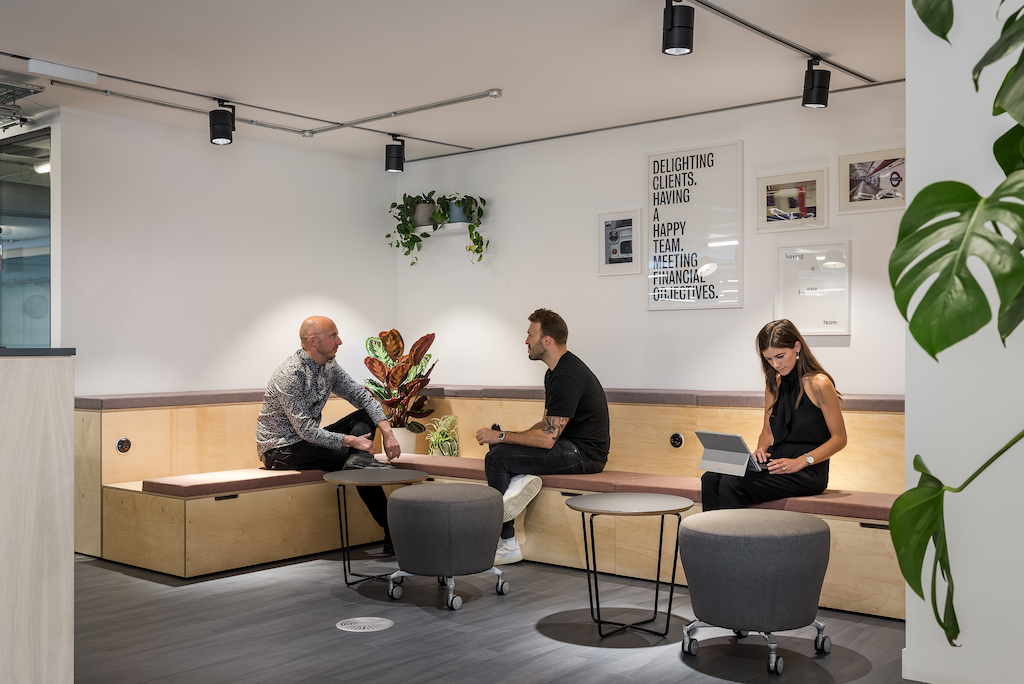

Keeping culture alive in and out of the workplace
In just a few short weeks, companies across the world advanced their digital strategies by five years when they sent employees to work from the confines of their homes. Employers rushed to scale remote operations while employees were suddenly faced with a whole new way of working. This brought with it challenges and benefits.
As businesses bring their people back into the workplace, some companies, like Fujitsu and Twitter, have announced that employees can work from home permanently as they recognise remote work’s positive influence on productivity. Others continue to blend home and office working.
Why it’s vital to stay connected
Many people now realise that remote working offers plenty of flexibility and autonomy. But it also brings a feeling of disconnection from our colleagues and the organisation itself.
Instilling a sense of community and togetherness is important wherever your people are based. It is essential that employees feel connected to the organisation they work for. Why does this matter? Because it helps people feel that they belong, that they are part of something bigger. It also helps them to make sense of their work and understand how they are contributing to the direction of the company and its objectives.
The importance of being part of a team
Teams play an important role in our sense of belonging and togetherness. They provide a ready-made network for support, feedback, collaboration and socialising – both in a professional and personal sense.
Teams are also proven to boost performance. According to Deloitte’s 2019 Global Human Capital Trends report, 74 per cent of the companies that adopt a team-based approach to leadership, as opposed to the traditional hierarchical approach, have seen an improvement in performance.
Feeling part of a team is easy if you sit alongside your teammate; but it’s naturally more challenging for those who work remotely.
So how can you create a sense of togetherness and community with a remote workforce? How can you make them feel part of a team where they are provided with regular contact, feedback, and support from their peers, managers and the wider business?
The answer, of course, is through technology.
Social technology: getting everyone in the same room
Of all the ways technology has changed our lives, the ability to connect and communicate with anyone, instantly and regardless of location, is one of the most life-changing.
At its essence, the rise of social media, instant messaging and video calls mean that we need never to feel disconnected again. We have access to the world at our fingertips.
The world of work has been quick to adopt instant messaging and video calls, with platforms such as Slack and Skype. However, to truly engage and connect people, workplace technology needs to mirror the technology we use in our social life. It should be familiar, fun, easy to use, mobile, and of course secure.
But technology on its own will not support a business’s culture. We can have all the tech in the world and still be estranged from our work and from each other.
We know how engaging social platforms such as Facebook can be, and how effective they are at keeping us in touch and in the loop with very little effort. This is where businesses need to catch up.
Social platforms for work should enable employees to connect across teams, departments, and locations. They should foster a culture of openness and collaboration, helping to break down silos and ensuring that information flows freely throughout the organisation.
They are also a place to catch up on company news, to see what other people are working on, and to give and receive recognition, a key to motivation.
Give workers access to all of this via the devices they choose to use, and people can be connected to one another, their managers, goals, insights, and the company at large, no matter where in the world they are based.
It’s not all about the technology
However, technology alone cannot keep people connected. There needs to be a concerted effort by business leaders to consistently reinforce company culture and amplify its purpose and meaning.
To do this, start by reinforcing the core culture you want, and its values. This can be achieved through a combination of:
- Regular consistent and transparent communication
- Frequent short meetings to help maintain focus, connection and energy
- Education and alignment of managers
- Frequent recognition of exemplary cultural and values-based behaviours
- Regular check-ins to clarify, align and reinforce
- Goals and targets that are aligned not just to the business plan, but the business purpose
- Ensuring that there is a balance between work and life
Those leaders who have found ways to maintain cohesive teams and keep them connected will emerge from the pandemic more resilient and ready to face the future, regardless of where their people are based.
People First by MHR is an HR platform that can keep your employees connected wherever they are. To find out more visit https://mhrglobal.com/future-of-work
by Emma Isichei, Chief Marketing Officer, MHR


The new normal: nomadic workforces taking centre stage
At the peak of the pandemic, it was estimated that almost half of Brits in employment were working completely remotely, a trend that has fundamentally changed the way businesses look at their operations. As 72 per cent of UK employees report a desire to continue working from home, at least part-time – citing a feeling of increased productivity and a better work-life balance as reasons – it seems working from home is here to stay, in some capacity at least.
For many, spending five days a week in the office is no longer required. Instead, the pandemic has accelerated the trend of what my CEO, Alex Shootman, calls “nomadic work” – a hybrid way of working where an employee can work from literally anywhere, whether the office, from home or while travelling. Covid-19 has proved that it’s not where we work, but how we work, and the outcome of that work, that’s critical.
From outputs to outcomes
The pandemic has thrown companies into a moment of shock-change, as they have had to determine nearly overnight how to support a now-remote workforce. How, when and where we work changed, making maintaining productivity in this new environment incredibly difficult.
Realigning on what it means to be productive – and how to measure that productivity – is now essential for companies. The notion of a nine-to-five workday where activity could be observed and continually calibrated is a thing of the past. And yet, in order to navigate the current and future state to positive business outcomes, this new distributed workforce must function as an interdependent web that consistently generates not just output, but focused and strategic outcomes.
Communication is just the first step
For some businesses the move to remote working was a new concept, and they experienced a sudden, greater dependency on technologies they had not typically used before. Zoom, Teams and Slack have become defining tools amid the pandemic, with many individuals using them both to continue business operations and socialise with colleagues they otherwise could not see physically. It was a fast and simple way to connect colleagues who were suddenly working in isolation.
When the pandemic struck, the question most leaders focused on was simply: “how do we keep everyone talking?” And while that was an important first step, the fact that the workforce could communicate didn’t necessarily mean they had the support they needed to engage fully in the right work.
Strategic work needs more than just communication, it requires constant connection between the day-to-day work (wherever it happens), and the prioritised objectives of the business.
Collaboration is insufficient
Present and future work requires that companies meet employees where they are, with the right processes and technologies to support them in becoming, and staying, engaged with both each other, and on work aligned to strategic objectives.
Collaboration technologies have seen a huge surge in uptake as leaders look for ways to keep their newly nomadic workforce productive. And while most collaboration tools can help teams coordinate and complete tasks and projects, without broader connectivity to systems, teams and departments across the rest of the business their impact is limited. Tasks and projects themselves do not exist on islands. They require budget and personnel data from financial and human capital management systems to properly allocate and manage resources. Many projects require compliance oversight from legal and regulatory departments. And depending on where work happens, specialised collaboration applications such as Jira, ServiceNow and Adobe will always be the primary workspaces.
Unless collaboration tools can integrate with the data and processes happening in those and other applications, work stays siloed, and employees and leaders have limited context and visibility into why and how work is – or is not – progressing toward the right outcomes.
Work management: empowering the nomadic workforce
Work management practices and platforms are fundamentally different to collaboration applications. Instead of focusing solely on connecting people and teams, they are designed to connect strategy to delivery. This shift in approach absolutely requires that nomadic workers are outfitted with the right communication and collaboration support, and then goes several steps further. Enterprise work management platforms also integrate work and data across people, systems and departments, providing context and connection for frontline workers, and visibility and navigation for leaders. Wherever they’re working, each person is assured that they aren’t simply busy ticking boxes, but have what they need to do their best work, and the assurance that their work is making an essential contribution to a larger whole.
Make nomadic work a competitive advantage
The pandemic has insisted that companies change their infrastructures to support a nomadic workforce. The real opportunity, however, is for organisations to take the opportunity to go beyond standing up more digital systems, and reimagine how work and work data can be transformed into strategic telemetry for an entire enterprise.
Just as CRM changed how enterprises use and value customer data, and ERP systems changed how they understand and manage corporate resources, work management platforms are changing how companies both empower and harness nomadic workers, to become fully engaged, creative forces for competitive advantage.
Paige Erickson is EMEA MD at Workfront


How to get more value out of business data
Companies struggling in the pandemic-stricken economy are searching for growth opportunities. Fortunately, there is one resource hiding in plain sight – and it’s in the IT department.

Some 68 per cent of data available to enterprises ends up not being used. That’s the key finding from an IDC survey commissioned by Seagate Technology, published in the report Rethink Data: Put More of Your Business Data to Work – From Edge to Cloud. The remarkable percentage identifies a loss, but also a business opportunity. Improved data management, combined with the new discipline of DataOps, holds the key to this opportunity, not just for IT departments but for businesses as a whole.
When it comes to digital, businesses must adapt to thrive
The key question is not whether a company will be digitally disrupted, it’s how. Consider London’s home-grown fintech champions, such as TransferWise, Monzo and WorldRemit: each has in its own way used a data-driven approach to build compelling products and services that are highly competitive with the established players in the market.
Yet most businesses fall well short of those fintech champions. Harvard Business Review reported that, on average, “more than 70 per cent of employees have access to data they should not, and 80 per cent of analysts’ time is spent simply discovering and preparing data. Data breaches are common, rogue data sets propagate in silos, and companies’ data technology often isn’t up to the demands put on it.”
DataOps to data value
So how can companies ride the digital transformation wave – and avoid being consumed by it?
According to Rethink Data, the top five challenges in putting data to work are: making collected data usable; managing data storage; ensuring needed data is collected; ensuring data security; and making the silos of data available. The good news is that 1,500 global enterprise leaders surveyed for Rethink Data identified the solution: DataOps.
IDC defines DataOps as the discipline of connecting data creators with data consumers. Fundamentally, this means employees talking about data, and using the right language when they do. It means robust data classification, and designating a purpose to each data set. DataOps is about figuring out what we want data to tell us. It’s about relying on technology, such as automation and virtualisation tools, to access data and use it to make better business decisions.
Implementing DataOps leads to better business outcomes – better customer loyalty, increased revenue, profit, and cost savings, better employee retention, and more. DataOps is both the means of digital disruption and the way to prevent falling victim to it.
Its importance means DataOps should not be delegated to IT and forgotten. It should be the responsibility of all business leaders.
The way I see it, the technological implementation of DataOps is essential – and relatively easy. The human part is trickier. DataOps starts and ends with communication – conversations about what we know, and what we want learn. It’s time for enterprise leaders to start having these conversations, stop overlooking the value unlocked by DataOps, and put all their unused data to work.
Jeff Fochtman is senior vice president of marketing and business at Seagate Technology. To find out more about powerful and practical strategies for building the future of data, attend the Seagate Datasphere virtual event: seagate.media/6007Tsk9L

 Everything you know about financial transformation is wrong
I was enjoying lunch with a former colleague the other day, and eventually we hit the subject of financial transformation. (Thrilling, right? We finance folks know how to party.) His team started their initiative years ago, but despite long implementation cycles and millions of dollars, it still hadn’t come to fruition. He shrugged his shoulders, conceding that the only thing he was sure about was the unlikelihood of the project ever being done. Then he went back to something he could control: his salad.
My friend is not alone. One in four executives believe their transformation will never be completed. That’s because financial transformation is so vague, with so many interpretations, that it’s lost all meaning. By the time they’ve started down the transformation roadmap, CFOs feel like they’ve been sold a bill of goods, rather than a plan of action.
So, what’s standing in the way of that high-performing, highly automated, analytics-driven office of finance? Well, it starts with what’s wrong with financial transformation as it’s understood today.
It’s not just another high-priced technology investment
Financial transformation should not be synonymous with another giant capital expenditure. Large-scale, on-premises ERPs might have been associated with transformation at one time, but cloud advancements now rival their power – at a fraction of the cost. Plus, APIs and integrations have broken down barriers between systems of record and systems of work (you know, where all the accounting and reporting work actually gets done).
Pandemics are no excuse to slow down
If you were able to operate as usual during the pandemic, good for you – you were one of the lucky ones. Most were caught off guard, still relying on common software and disconnected systems from the dark ages. That made it a Herculean effort to meet deadlines, keep everyone on the same page, or even complete basic tasks. While the work got done (eventually), there was also a cost in human capital – with employees juggling work, school, and family, all coexisting in the same building.
Now the pandemic is serving as a catalyst of transformation, according to a PwC survey. Close to half of finance execs plan to make remote work permanent, and more than 40 per cent plan to accelerate automation and introduce new ways of working. Still, it seems like those numbers should be higher.
Transformation isn’t as costly as it sounds
While cost is always a concern, analysts at Gartner counter that successful transformations identify future business needs and the corresponding services finance will be able to deliver. On the other hand, unsuccessful transformations are only worried about hitting a cost target.
These finance services are the things we all dream of: more time for analysis and strategic thinking. Analysts are being paid a lot of money to tie up numbers and spin up pivot tables. Let them work their wonders on value-added activities instead.
It’s okay to start small
You hear “transformation” and immediately start thinking of massive change (and massive consultant hours). That’s a surefire way to raise eyebrows in the boardroom – and scare everyone in the office to boot. Iterative steps and focused solutions can cover a lot of ground quickly, without significant disruption to existing workflows. The right platforms can even do the hard work first – connecting your people, data, and processes anywhere and everywhere – and then expand into other areas.
For example, Deloitte’s Sandy Cockrell cited trying to improve the monthly financial close process: “It’s a one-time effort, but the benefits would repeat year after year. That one-time effort may require people or technology that is unique or new. And to get it done, it could require someone that you rent for a month or two that has specialised skills that can help you get it done.”
With your attention on bite-sized chunks – and while using solutions that foster connectivity – you can tackle that transformation in no time.
You can do this
Despite all the talk and money spent on financial transformation, there is a better way. Focusing more strategically on connected solutions that improve specific processes can save time, cost and future interruptions – be they pandemics or murder hornets. Moreover, you can advance your financial transformation once and for all, using connectivity as the foundation of your success.
For more on optimising a finance transformation program during a pandemic, consider these six recommendations from Gartner.
Steve Soter is Senior Director of Product Marketing and Accounting Industry Principal at Workiva


Getting your remote employees cyber-secure at home
How quickly times can change. At the beginning of the year, home working was something that many people had heard about, but relatively few had practised. Now it has become routine for the majority and, interestingly, many organisations have found that it has worked surprisingly well.
One of the key enablers, of course, has been the increased availability of IT devices and broader internet connectivity. In fact, the collective investment in technology and infrastructure over the past few years has enabled a relatively smooth transition to remote working. That said, the need for security and protection has never been greater, and perhaps unsurprisingly, it did not take long for certain vulnerabilities to show. This year saw an increase in worldwide phishing threats and other cyber-attacks from nefarious actors seeking to take advantage of the pandemic. At the height of the global lockdown period, it was reported that more than 100 million phishing emails were being blocked every day, with a fifth of those being scam emails related to coronavirus.[1]
The truth is, working from home doesn’t always have to pose such a grave cyber-security risk. It can be a secure, seamless transition from office-based work if organisations are fully prepared for it. The question is whether they have actively done so, or simply assumed that staff already use technology at home, and know how to protect themselves.
While there are plenty of opportunities for people to be protected and improve their IT security awareness, this may not translate so well into practice. Being threat-aware is not the same as being cyber-security literate. In other words, identifying a threat does not necessarily mean that someone knows how to handle it or provide a resolution. Similarly, the fact that safeguards are available does not mean they will always be used effectively. Too often, people handle security badly by default, such as choosing weak passwords or failing to install important updates. The guidance is out there if we look for it, but it’s questionable whether staff are actively supported or encouraged to do so.
A good insight into the preparedness of organisations comes from the latest Cyber Security Breaches Survey from the Department for Digital, Culture, Media & Sport (DCMS).[2] Though published at the beginning of the lockdown in late March, the fieldwork for the survey was conducted at the end of 2019. As such, it provides true insight into the measures that organisations had taken as standard, and how they were positioned ahead of the pandemic.
The survey explores the extent to which organisations have addressed the recommendations in the National Cyber Security Centre’s 10 Steps to Cyber Security. These span a variety of technical and organisational measures, but in terms of readiness to switch to remote working, the most interesting steps are those relating to “user education and awareness”, and “home and mobile working”. The former relates to the percentage of businesses that have user-facing policies on acceptable and secure use of systems, while the latter refers to having established clear policies on working outside of the workplace. In both cases, one would hope that organisations already promoted policies and awareness. However, in the vast majority of cases, most organisations do not cover the steps in the first place. The 2020 results suggest that just a third have addressed user education and awareness and only a quarter cover home and mobile working. Based on these findings, it seems rather unlikely that staff will have been fully prepared for the shift to remote working.
In some cases, working from home can lead to complacency as staff are more inclined to be vigilant when operating in work environment. Now in the comfort of their homes, some may feel more relaxed and less likely to focus on the cyber-security policies of the workplace. In fact, many people may be working remotely on their own devices, therefore, there is no guarantee that they will have configured them appropriately or installed the necessary security software. Conversely, if staff are using work devices, they need to be able adhere to security policies and be clear on the bounds of permitted use. In the future, businesses must make specific provision for the cyber-security of home workers, if they are to minimise any potential threats or vulnerabilities.
With remote working proving successful for many, we may see a situation where businesses explore increasingly flexible work options in the future. While some may have learned from recent experience, if remote working is to continue in a meaningful way, there needs to be greater awareness of the cyber security measures that support it. Home workers must be fully prepared, in terms of the technology used to protect devices and the knowledge and skills to better protect themselves.
[1] https://www.bbc.co.uk/news/technology-52319093
[2] https://www.gov.uk/government/publications/cyber-security-breaches-survey-2020/cyber-security-breaches-survey-2020
by Steven Furnell, senior member of the Institute of Electrical and Electronics Engineers (IEEE) and Professor of Cyber Security at the University of Nottingham
 Steven Furnell is a Professor of Cyber Security in the School of Computer Science at the University of Nottingham. His research interests include the usability of security technology, security management and culture, cyber-crime and abuse, and technologies for user authentication and intrusion detection. He has authored more than 330 papers in refereed international journals and conference proceedings, as well as books, including Cybercrime: Vandalising the Information Society and Computer Insecurity: Risking the System.
Professor Furnell is also the Chair of Technical Committee 11 (security and privacy) within the International Federation for Information Processing, and a board member of the Chartered Institute of Information Security.
To find out more on the topic of home working and cyber-security, please click here.
For the Department for Digital, Culture, Media & Sport’s (DCMS) full Cyber Security Breaches Survey, please click here.




A people-first approach is the key to successful workplaces
The ways businesses have had to adapt this year are not limited to short-term responses to Covid-19, but a whole new beginning for many. New ways of working and managing businesses present a great opportunity to not just recover from the consequences of the crisis, but to accelerate transformation through technology.
During the early stages of the pandemic, at Tata Consultancy Services (TCS) we moved over 99 per cent of our nearly 500,000 strong global workforce to remote working using our Secure Borderless Workspaces™ model. Using this, we’ve also supported many of our customers to do the same, including Halfords, Mace, M&S and Seadrill. Technological innovation, largely facilitated through the SBWS™ infrastructure, has enabled the deployment of collaboration platforms, cloud-enabled infrastructure and robust security practices to continue critical operations.
TCS associates have adapted to remote working with impressive resilience and are collaborating even more, and with increased productivity. Clients are comfortable and are asking us to take on more of their digital transformation work; associates are happy that they have more flexible working hours and are saving time on commuting that can now be spent in other ways.
Part of the reason that TCS was able to adapt so quickly and securely is because of our pre-existing agility strategy, albeit one we have put to the test earlier and further than anticipated.
Three years ago, TCS set itself the target of becoming 100 per cent agile by 2020 and we invested heavily in this to facilitate better collaboration across teams without compromising on security. This investment gave us insight into what would be needed to execute agile working at scale. Covid-19 acted as a catalyst for further change. The question now is around how we continue to maintain, embrace and develop this change.
TCS’s Business 4.0 philosophies describe the essential behaviours which will allow businesses to survive and thrive. They should be:
• Purpose-driven – centred around embracing risk and mass personalisation
• Resilient – leveraging ecosystems, cloud technology and automation
• Adaptable – being intelligent, agile and creating exponential value
These behaviours put the customer first and pull from the expertise of other partners in the business ecosystem. By adopting Business 4.0 philosophies, companies can better leverage digital technologies, making them more able to deliver business outcomes and thrive during disruption and change.
How resilience and adaptability can help a business stay true to its purpose was a core focus at TCS’s Innovation Forum panel discussion, entitled A New Beginning – Purpose-driven, Resilient, Adaptable with Business 4.0, where leading companies spoke about how they are looking to, and planning for, the future. The panel looked at how the events of this year have accelerated the use of technology to enhance agility and how, for many businesses, this period has also reinforced their organisational purpose and their commitment to their communities.
Ajit Dhaliwal from Aviva stressed the opportunity to place a greater focus on people, culture and wellbeing and spoke about having “to adapt to doing business differently and arming our people in teams with that differing skillset and toolset to be experienced to operate in these very different conditions.” To allow employee collaboration wherever they are without compromising on delivery, creative discussion and innovation, companies need to put systems and platforms in place which work.
Sara Milne from Lloyds also made the point that during this time employers have had to be more aware of the different circumstances each of their employees and customers face. “We have to respect that and find a way forward that works for our employees and works for our customers.” While we adapt to this changing landscape, the tenets of Business 4.0 hold true. We need to support our staff and allow for collaboration, and personalise that experience too.
It is more important than ever that employees feel involved in decision-making and are trusted to deliver results, manage their own time and make the most of the tools available to collaborate wherever they are working from.
The successful implementation of our SBWS™ model has led to a new business vision at TCS that puts agility and flexible workspaces at the heart of what we do. SBWS™ has been such a success that it inspired the creation of our 25X25 business strategy, where by 2025 only 25 per cent of TCS associates will need to work out of our facilities at any time; every associate will be able to be 100 per cent productive without spending more than 25 per cent of their working time in a TCS office. By doing this we can improve our productivity and service while still increasing customer satisfaction by focusing on relationships and streamlining processes. By making the physical location of our staff far less critical to our output, we can facilitate a more dynamic, flexible and efficient way of working. TCS is also working with clients to overlay wellbeing solutions to help them look after employees better as they face the new physical and mental challenges of working from home
While uncertainty will continue to be a feature for some time to come, by trusting employees and supporting our customers, the future of the workplace does not need to be insecure. What this crisis has shown us is that working location may not be vital to business success. What really matters are the people at the heart of a workplace, keeping companies innovating and helping company culture thrive.
Find out more about what TCS can do for you here.
Ved Sen is Digital Evangelist at Tata Consultancy Services UK&I
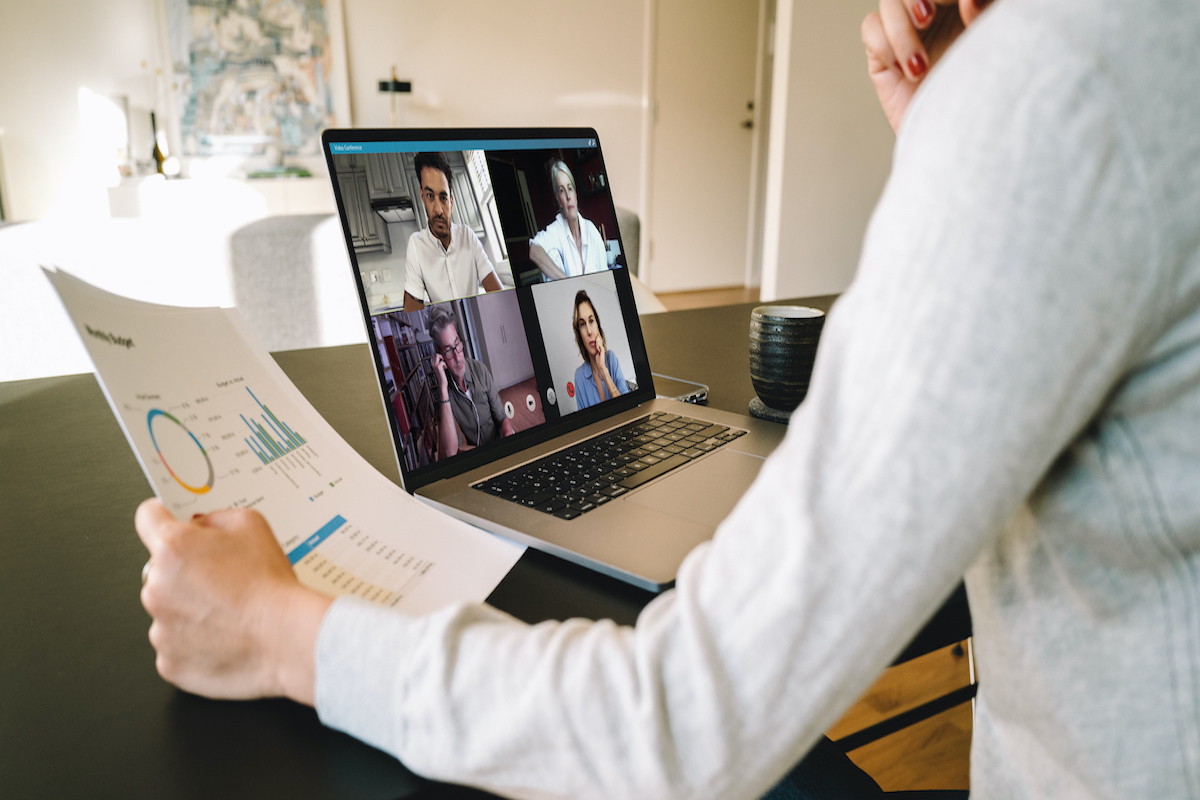

Are we in danger of missing the technology opportunity?
It has been estimated by McKinsey that about half of the activities people are paid to do today have the potential to be automated by adapting currently demonstrated technology.
Opening his talk to the Institute of Workplace and Facilities Management Conference (IWFM) earlier this year, tech strategist Antony Slumbers suggested it was inevitable that anything structured, repeatable or predictable will eventually be automated. Slumbers was speaking barely a year after the IWFM published a report, Embracing Technology to Move FM Forward, where we asked facilities practitioners to assess what impact emerging technologies will have on their profession in the coming decade.
In the world according to McKinsey and Slumbers, the results were a bit of a worry. Only when it came to the most familiar tech tools, or those already in their operating sphere, could our respondents foresee their playing a significant part in the future. Technologies such as building management systems, building information modelling, computer aided facilities management and integrated workplace management systems were ranked highest by over half of respondents, with a nod to people analytics and cloud computing.
Outside that list were big data, machine learning, automated vehicles, and even robotics. Less than a year before we published our report, Harvard researchers had described AI, specifically machine learning, as the most important general-purpose technology of our time.
We also asked facilities professionals to rank four possible tech futures in order of their likeliness to occur. Most favoured an incremental digital upgrade (broadly the same as now but with more technology), with some suggesting more radical change through a digital reinvention (a move to data science and analytics). In third place was an incremental digital downgrade (marginalisation and deskilling) and the least likely of all was the radically negative digital displacement (facilities management ceasing to exist).
If humans are hardwired for optimism, this pattern is typical: every entity prefers to imagine a positive future for itself, rather than entertain the idea of extinction, right?
However, Slumbers believes this will have a massive impact, and not necessarily in the way we expect. Artificial intelligence has vast capabilities – of perception, communication, knowledge, reasoning, planning, predicting – and great segments of the work which workplace and facilities professionals do in their roles are perfect for it. But what is absent from all this, he says, and the reason work is changing, is because of one thing: creation. Computers are rubbish at creation and humans are very good at it.
So, the change we will see, he argues, is between old work (structured, repeatable, predictable) and new work (design, imagination, inspiration, empathy, social intelligence).
The future-proof workplace must be designed for this new work: one which fosters skills for collaboration, interaction, learning and engaging – human work, in other words.
The trick to riding the technology wave, rather than reacting to it, will be changing the workplace mindset from one which sees technology as helping to do a job (such as managing a building) to redefining the job as one which helps everyone else do theirs (such as enabling communities). The move towards a more service-focused mentality is not new, but it presents a new opportunity for this relatively young profession, allowing it to begin to show, in real terms, how it can contribute to organisational performance. Technology can be a key driver of that – it’s already profoundly changing our private lives and has begun to shape our ways of working.
Technology presents amazing opportunities, but the very best can only come from those opportunities if, instead of focusing on what we do, we pay more attention to the why.
If facilities professionals could begin to reimagine their roles in terms of what technology could do to enhance the workplace experience, they would not only consider tools that support the built environment, but also those that might radically alter the workplace experience beyond the next decade.
Our new collaboration with Microsoft, connecting workplaces, will explore a shared vision of the role of technology in high-performing workplaces. Building on the challenges identified in our initial research, we aim to help organisations create connected and successful workplaces.
Discover more about our research: Embracing Technology to Move FM Forward
Chris Moriarty is Director of Insight and Engagement, IWFM


Five tips for building a global benefits strategy that works
Gaining a holistic overview of your entire workforce and implementing a global benefits strategy to match is a challenge for every HR professional working for multinational organisations.
First, there are the geographical and logistical challenges of administering benefits across multiple countries. Then there are the generational challenges, with each having different benefit preferences depending on life stage.
Leading organisations understand the importance of offering their employees benefits, both to increase the value of an employee’s total reward and help make their everyday that little bit easier. The latter is especially valid in light of the current Covid-19 situation. For benefits to be of real value, personalisation is crucial. However, knowing what benefits to offer and how to administer them globally is understandably tricky.
If you’ve found your benefits are not quite hitting the mark with your employees, you’re not alone: Deloitte’s Global Human Capital Trends (2018) survey reveals that only 8 per cent of organisations say their rewards programme is “very effective” at creating a personalised, flexible solution.
Below, we offer five tips for how you can build a global benefits strategy that actually works.

Choose a benefits platform provider
First and foremost, the only way to effectively manage a global benefits strategy is with the help of a global benefits platform. In fact, without one, any global benefits strategy will most certainly become an administrative nightmare.
On the decision to implement a global benefits platform to assist with benefits management, Caroline Roque, Benefits and Compensation Manager at Eurosport France, said, “We were in need of one single go-to place for all employee information and benefits. Our scope was also to decrease the number of questions to the HR department.”
A global benefits platform creates greater employee self-service by digitalising benefit enrolments and reduces HR administration through the automation of benefits processing, foreign tax calculations, and much more. If your benefits provider of choice also has an app, employees can enrol in benefits anywhere, at any time.
Whether it’s a milk allowance in Botswana, airport business lounge passes in Russia, tuition reimbursement benefits throughout South America, or flexible benefits plans in Germany, the UK or the Netherlands, be sure to choose a global benefits provider with knowledge and experience in administering complex benefits programs across the globe.
Go global but local
Above all, the key to managing an effective global benefits strategy is adopting a global-but-local approach. This means that while you’re managing your global benefits strategy from head office using a single platform, your benefits are localised to each country, including the use of local vendors and suppliers.
Let’s imagine your organisation wants to offer its employees benefits for sustainability mobility. The benefits are offered globally but with local variation. For instance, in one country, the benefit may be a bicycle discount, while in another it may be a discounted monthly public transport card.
Alternatively, you may decide to offer a bicycle benefit in all countries. The details of the benefit would be adapted to the local market, including the use of a local supplier.
Use benefits that reflect your organisation
One Glassdoor survey reveals that approximately 60 per cent of people say benefits play a significant part in their decision making when considering a job offer, while LinkedIn reveals that 75 per cent of job seekers consider an employer’s brand before even applying for a job.
Therefore, when thinking about your global benefits strategy, think about what benefits best reflect your company’s values. What benefits can you offer that are unique and reflect your organisation?
Using the earlier example, let’s say that one of your company’s values is sustainability. You can then offer a range of benefits employees can choose from, which are in line with your company values.
Consistency is important – however, avoid a one-size-fits-all approach. Instead, acknowledge the diversity of each country. With this approach, your benefits reflect your company values at a global level but work at a local level.
Remove the guesswork and use data
The Deloitte survey mentioned above found that only 9 per cent of companies reported using data and analysis to a “great” or “very great” extent to understand employee benefit preferences.
Unless you’re using data and insights, your benefits strategy is most likely based on guesswork, which isn’t the most effective global benefits strategy.
With the help of your global benefits platform, you can access data and gain valuable insights into your global workforce and your benefits. From the platform, you can look at which benefits are performing, and which ones are not, see supplier costs, view benefit and pension costs and, as a result, reduce the margin of error on benefit spending.
With this data, you can create custom reports and share them with executives to facilitate global decisions.
When in doubt, ask
While data can provide many insights, sometimes the easiest thing to do is ask your employees what they want. Use your benefits platform or company intranet to survey your workforce and find out what benefits are of most value to them.
Under current circumstances, benefit needs are likely to have changed. What do your employees need right now? Grocery delivery services? Digital subscriptions? New home office equipment? Find out what benefits would make your employees’ everyday easier.
In conclusion, an effective global benefits strategy should be manageable from a single source, reflect the company’s values, provide the framework for all countries but allow for local flexibility and adaptability.
To learn more about global benefits management, visit Benify Insights where you can browse and download e-books, whitepapers, and client cases, as well as read our latest blog posts, listen to webinars, and more.
Scott van Dort is HR & Employee Benefits Content Specialist at Benify
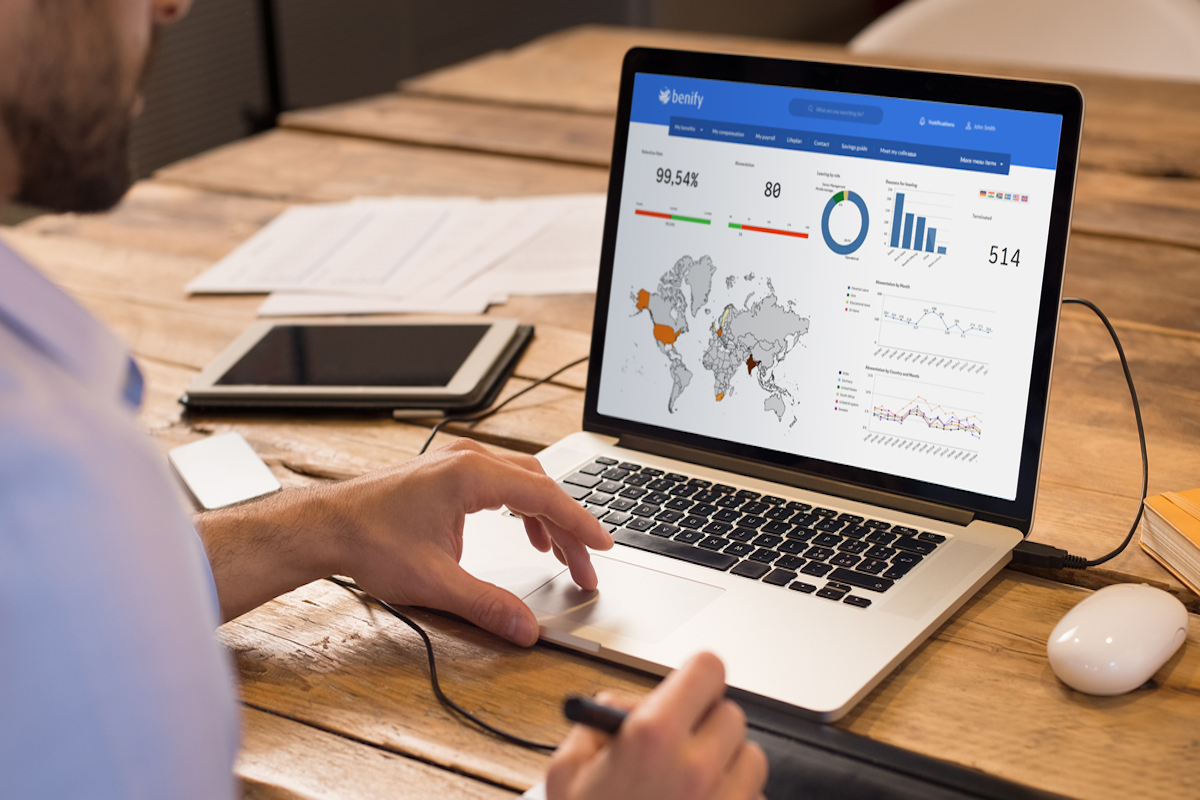

Our post Covid-19 workplaces will forever be changed: what to know about the new remote landscape
Right now, tens of millions of employees are working from home. Some on a permanent basis, others temporarily. As a manager – or even as an entire enterprise – you’re now faced with an urgent need to adjust how you interact with, engage and motivate your employees. Perhaps even at a global scale.
As head of HR at a global fintech company, I’ve seen this challenge firsthand. We’ve had to rapidly shift our priorities since the onset of Covid-19 to accommodate virtual arrangements for our employees separated geographically across the globe. We are not alone in the move to supporting broader work-from-home accommodations. Several multi-billion-dollar companies have even announced they are shifting to permanent work-from-home structures for some or all of their employees. And it’s no stretch to expect more businesses, large and small, to follow suit.
Our own in-house incentives and engagement experts, including the team leading our Employee Success Platform, called Achievers, have helped us navigate the change, and we have some tips and ideas for other businesses trying to do the same.
Offer the technology needed for employees to have meaningful connections
Engaging employees, encouraging positive morale, boosting productivity and cultivating culture are essential for any business. Covid didn’t change that – but what has changed is how we do those things. Now that working from home will be more prevalent, we all need to ensure we’re adjusting to digital- and virtual-friendly strategies to accommodate the new work landscape.
Employees want to be recognised for a job well done, hitting a company milestone or closing a big sale. And they want to feel like their employer cares about them – especially during periods of change. In-person tactics that used to be effective are irrelevant in virtual environments. To reach your virtual and digitally savvy audience, it’s important to understand how they want to be recognised.
In a recent study, we wanted to find out what employees found most motivating, and the results were overwhelming: a whopping 84 per cent of employees surveyed who work from home want rewards in the form of prepaid/gift cards[1]. Additionally, gift cards are regarded by employees as a key motivator (76 per cent), driving feelings of being valued (84 per cent), and increased loyalty (78 per cent)[2]. These cards are extremely versatile and give employees a chance to treat themselves to something they wouldn’t normally purchase, or provide them with unexpected funds to buy something they need.
Research has also found that most people surveyed2 would be encouraged to work harder after receiving gift card rewards and feel that gift card rewards show that their employer values them. In addition to digital rewards, digitally enabled rewards that can be uploaded to a mobile wallet or spent online are also impactful. As our world gets increasingly digitised, motivating your employees from afar in the ways they want will be a major competitive differentiator.
Taking action
Work-from-home arrangements may be here to stay and engaging an active online workforce spread out geographically will be important to maintain company culture, productivity and employee retention. Providing ways for employees to meaningfully connect with one another and by offering the right rewards and incentives will ultimately help drive loyalty and help to reinforce positive workplace behaviors that directly contribute to the bottom line. Is your business ready?
Suzanne Kinner is Group Vice President of human resources at Blackhawk Network
[1] The “Receiving Incentives and Rewards from Your Employer” study was an internet-based study conducted by SurveyMonkey on behalf of Blackhawk Network between March 24-25, 2020. The sample size included 1,718 working U.S. employees aged 18-60.
[2] “BrandedPay: How People and Brands Connect Through Payments” is based on the findings of an internet-based survey conducted by Leger on behalf of Blackhawk Network between February 12 and March 17, 2020. The sample size included over 12,000 respondents in eight countries.


Overcome the skills gap with your own pool of trained talent
Becs Roycroft, Senior Director of Global Emerging Talent Operations & Reskill, mthree Businesses continue to struggle to hire the talent they need. In fact, one of the greatest challenges that leaders face is to find candidates with the right skills – the skills gap. Many factors contribute to the skills gap, including the pace of technological change, and the pressure to innovate and maintain legacy applications and processes, all of which make hiring challenging.
There are numerous options for an organisation to hire staff, such as using in-house HR teams, external job boards or standard recruitment agencies. But they can end up being costly. A bad hire doesn’t just cost time spent on interviews, but also – and worse still – could hurt a business financially and reputationally, and destroy morale.
Another option is for an organisation to strategically build its own talent pool of people trained in the specific skills needed. This takes a little longer to initiate but will pay off in the medium and long term, with a workforce built with the future in mind, not just to fill current gaps.
There are two ways an organisation can build a talent pool:
• Reskilling its own workforce
• Through an emerging talent strategy
Reskilling is about unleashing the talent within an organisation. Taking its own non-tech employees and reskilling them into tech roles, for example, retains a company’s organisational knowledge, business acumen and culture and brings a diverse mindset to the IT function.
Hiring emerging talent (graduates and early career shifters), by our definition, is fundamentally different from the traditional job market. Our emerging talent are pre-trained in the tech and skillsets a business requires. The business doesn’t have to cover the further expense of training and nurturing an employee from day one.
According to the Future of Jobs Report, 75 million jobs in 20 major economies are expected to be displaced by 2022. At the same time, technological advances and new ways of working could also create 133 million new roles. But even if businesses managed to reskill all 75 million people into new roles, that still leaves a skills gap of 58 million unfilled positions.
Organisations will need to look at their whole workforce strategy and how each element complements the others in order to produce a future-proof, engaged and loyal team that closes the tech skills gap for their business. There needs to be shift in the way organisations plan their workforce strategy. It has to be a combination of reskilling their own employees in areas where jobs are being lost and moving them in to tech roles, as well as looking to the future workforce in the shape of new graduates – the emerging talent.
As an emerging talent and training business, at mthree, we can help organisations do both, from hiring STEM graduates with huge potential, training them in the technology stack an organisation needs, and embedding them into their teams across the globe to reskilling an organisation’s own employees in Java, GoLang, Python and Data Science.
2020 has seen huge change across the globe and has highlighted inequality across the workplace with so many groups underrepresented – especially in technology. Business need to look at their hiring practices and create strategies for tackling these issues.
mthree is pledging to cover the cost of training 1,000 people from underrepresented groups through its Aspire 1,000 programme, helping them to find a career in technology. Through its bootcamp business, mthree, in association with The Software Guild, will deliver world class training for free, to help candidates land their dream role in tech.
We are looking for organisations who believe in driving equality and inclusion to join us, pledge roles to underrepresented groups, and close the skills gap for our clients – and the Aspire 1,000 programme is just the beginning.
Get in touch to hear about mthree’s emerging talent and reskilling solutions
Find out more
For more information, visit www.mthree.com
 Finding balance after an unprecedented year of change
There is no part of society or the economy that has not been touched by the Covid-19 pandemic. It saw the biggest shakeup to common working practices in living memory, with remote working becoming widespread for the majority of office-based workers. While the world of work will never be the same again, the assumption that office life, as we know it, would come to an end and people would want to universally move to remote working now looks to be an overreaction.
For the foreseeable future, the welfare of staff will continue to be of paramount importance, and as subsequent waves spread across Europe bringing further lockdowns, there will remain a high proportion of employees working from home. However, a new report from Barco ClickShare, Finding a New Balance, reveals that there is now a strong desire to return to normal, which includes reconnecting with colleagues and friends in a way that only office life can deliver.
Almost half of employees (49 per cent) say they enjoy home working far less now than they did at the start of the pandemic, while 85 per cent are keen to return to the office to resume the social aspect of working life. However, the desire to head back to the office comes with the caveat that people still want to retain the freedom, flexibility and functionality to enable them to work from home – but this time on their terms.
Employees see a future where they can achieve a positive balance of office and home working, spending a maximum of two days working from home. The shift to a hybrid work model is nothing new, but a trend that has been building for many years with the advancement of technology. Covid-19 has simply acted as the flashpoint, accelerating the timeline.
Technology is fundamental to this transformation, as hybrid working is only viable and productive when employees have access to the right tools and solutions. Office workers foresee a significant rise in the number of hybrid meetings over the next 12 months, according to the report, as businesses rely increasingly on virtual technology to connect their home and office-based teams. Video conferencing is at the heart of this virtual collaboration, with three quarters of workers (77 per cent) using video conferencing rooms at least once a week. Interestingly, workplace collaboration now revolves around the laptop, with 56 per cent of people expressing a clear preference for using their own devices to access and host virtual conferencing sessions, whether at home or in the office. It is no surprise then that virtual conferencing technology is now seen as the number one investment priority by office workers.
The wider adoption of virtual technologies will drive a redesign in office space to facilitate better connectivity between physical and virtual participants. Today, half of employees prefer formal meeting rooms over huddle spaces, as they are better able to accommodate the technological infrastructure required to facilitate virtual collaboration. In fact, during the past year, at the height of the pandemic, nearly half of employees reported a surge in daily meetings frequency.
Investment and further innovation in technology will see meeting quality and employee engagement continue to rise. Almost half of employees (49 per cent) admit that collaborating remotely does not yet come naturally. These shortcomings can be addressed by providing access to better IT infrastructure and workplace technologies to facilitate virtual interactions that are more natural and authentic and are able to bring the humanity back to online engagement. Barco’s quarterly Meeting Quality Index suggests a cautious optimism, with 35 per cent of people believing meetings have improved from this time last year.
Employee feedback strongly supports the need for face-to-face interaction at work. However, organisations must find the right balance between physical contact in the office and virtual collaboration. They must ensure that their employees have the best possible technologies to work effectively and productively together, whether they are in the office or working from home. Businesses must be inventive and adaptable in order to rebuild and eventually thrive in the post-pandemic world. If they can successfully navigate this transformation to a hybrid work structure, supported by the right technologies, they will be better prepared to deal with the challenges over the coming months or even years, and seize the opportunities that will surely follow.
By Lieven Bertier, Director of Workplace, Barco
Image provided by Barco
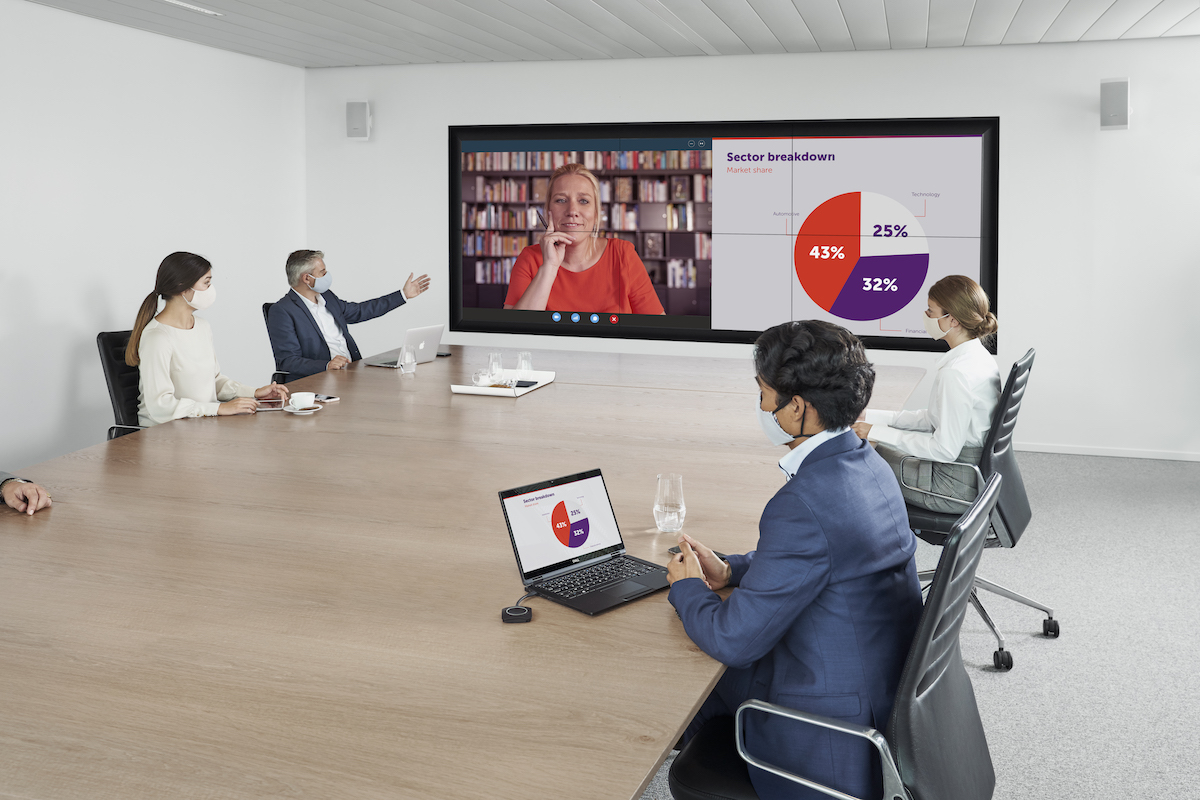

How small businesses in England can access workplace apprenticeships
That’s why the Apprenticeship Intermediary Service, launched earlier in 2020 by the National Skills Academy for Rail (NSAR), which offers no-nonsense practical apprenticeship advice, knowledge and support for local enterprise partnerships and hundreds of other smaller business intermediaries across England, is an invaluable resource for small businesses.
The primary objective of the Apprenticeship Intermediary Service – which smaller employers and small business intermediary groups in England can access online at www.apprenticeshipintermediaryservice.co.uk – is to offer a one-stop shop for advice, resources and help on how to best access and easily engage with apprenticeships.
Millions of younger workers returning to the workplace
As the country gradually returns to work, smaller employers across England need to know that they have a wide range of options when it comes to successfully accessing and engaging with apprenticeships.
In particular, workplace-based training and apprenticeships need to work better than ever before for the millions of younger people entering the workforce or navigating the initial years of their careers.
After all, it is the 18-to-24-year-old demographic that has been hit particularly hard by the Covid-19 lockdown restrictions over the past three months. The number of Britons aged 18 to 24 making claims for unemployment benefits, for example, rocketed by a third throughout the month of May, according to ONS figures.
Hence, it is essential that firms and employers are given as much help, practical advice and resources as possible when it comes to deciding which types of workplace-based training and apprenticeships work best for them and their employees.

Making access to apprenticeships easier than ever before
Breaking down what many smaller employers considered to be obstructive or confusing bureaucracy surrounding establishing apprenticeships is another key objective of the Apprenticeship Intermediary Service, helping to make accessing apprenticeships far less intimidating and much easier.
Prime Minister Boris Johnson recently announced his support for younger people who have been hit hard by the Covid crisis, promising to guarantee an apprenticeship to train up and provide jobs for every young person across the country.
That’s a bold move, particularly in the early recovery stage of our post-Covid economy, with countless small firms struggling to stay afloat. Yet it clearly displays the importance the government attaches to workplace apprenticeships and their value to the ongoing growth and success of the UK economy.

Getting younger people excited about apprenticeships
Now, more than ever, there is a vital need to get younger people entering the workforce across England excited and aware of the apprenticeships, skills training and workplace-based training opportunities they can potentially access and benefit from.
This is a key reason why the National Skills Academy for Rail (NSAR) was contracted by the Education and Skills Funding Agency (ESFA) to deliver the Apprenticeship Intermediary Service to hundreds of intermediary organisations across England.
NSAR recently announced that the Apprenticeship Intermediary Service has already reached almost 700 business intermediary groups across England to date.
Putting smaller employers back in the apprenticeship driving seat
The laudable objective of the NSAR’s Apprenticeship Intermediary Service is the aim to reach more than two million smaller employers across England, helping to put smaller businesses back in the apprenticeship driving seat.
New legislation was introduced in January, prior to the lockdown period, expanding the apprenticeship service online system for all businesses, not just large ones. This allowed employers that do not pay the apprenticeship levy to take much more control over how they engage with and manage apprenticeships, and also prepare smaller employers to access funding through their own apprenticeship service account. This ensures businesses are far more empowered to do the best for their longer-term economic health and profitability, and it strongly encourages the continuation of much higher-quality apprenticeships for millions of young people across the country.
“There are more than two million smaller employers in England who now have more choice and control over the ways in which they engage with apprenticeships and apprenticeships funding,” explains.
“NSAR delivered an intermediary support service from November 2019 to March 2020, taking a ‘one-to-many’ approach in reaching smaller employers to raise the awareness of the changes to apprenticeships. Over that time, we engaged with more than 1,000 individuals from almost 700 business intermediary organisations across England, and worked in partnerships with these organisations to ensure they had the right tools to help them aid their smaller employers in navigating their way through the changes to apprenticeships.”

Importantly, it is these business intermediary groups that play a vital part in reaching the 2.6 million smaller employers across England. As explains, “We’ve already attended, facilitated and delivered more than 150 events across England in collaboration with intermediaries such as local enterprise partnerships, chambers of commerce, combined authorities and sector bodies such as CITB, as well as lots of other local business intermediary groups.”
Smaller employers are encouraged to get involved and register with the online apprenticeship service at www.apprenticeshipintermediaryservice.co.uk, to access all the resources, tools and information they need to get the most out of apprenticeships for their businesses and local business networks.
For more details on the National Skills Academy for Rail (NSAR), click here.